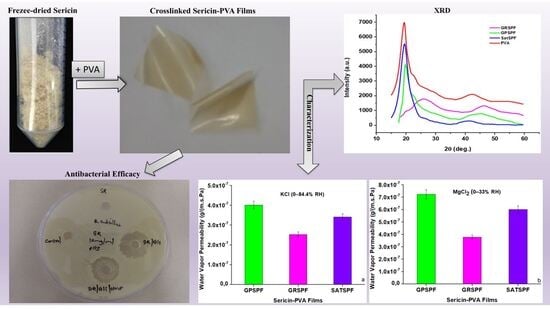
The versatility of sericin as an ideal biopolymer for biomedical applications is based on the finding that it has a mitogenic effect on mammalian cells, which further supports the potential use in cell culture and tissue engineering [ 8, 9]. Skin repair application of sericin films was supported by slow degradation, which heightened fibroblast cell attachment, promoting cell viability [ 10]. It was found that crosslinking sericin and PVA influences chemical structure changes, accordingly affecting the swelling degree and contact angle of the sericin–PVA film [ 11]. The feature indicates that the sericin–PVA composite films can be utilized for wound healing and topical drug release. Several studies have reported the development of silk sericin composites into suitable biomedical scaffolds, including nanofibers, films, hydrogels, membranes, nanoparticles, and porous 3D sponges [ 12, 13, 14, 15, 16, 17, 18]. Sericin materials and composites have been used in several tissue engineering applications, including skin care, as drug delivery vehicles, and as cell culture additives [ 19, 20, 21, 22, 23, 24, 25]. For the relevance of this study, a brief review is provided on the effectiveness of silk sericin composite films in supporting wound healing, tissue engineering, and drug delivery systems. For example, the efficacy of sericin extract as a wound healing component was highlighted in a study by Tsubouchi and colleagues (2005) [ 26]. The study found that sericin enhanced the attachment of primary cultured human skin fibroblast cells, and this promotion of attachment and subsequent proliferation of skin fibroblasts is considered crucial in the healing process of skin lesions [ 26]. In a similar study by Teramoto and colleagues (2008) [ 27], sericin solution was gelled with ethanol to form gel films. Infrared results showed that these sericin gel films consisted of water-stable β-sheet networks assembled during gelation. The findings demonstrated that the sericin gel film could rapidly absorb water and reach an equilibrium water content of 80%. Additionally, the results showed that mouse fibroblasts adhered to and exhibited no cytotoxicity when placed on the sericin gel film. These attributes highlight the potential of sericin film for wound dressing [ 27]. The sericin films produced by Nayak and colleagues (2012) showed slow degradation, increased fibroblast cell attachment, and high cell viability, making them effective for skin repair applications [ 10]. Other studies also demonstrated the healing ability of sericin film, as it stimulates the migration and proliferation of different cell lines, including mammalian and hybridoma, as a supplement in serum-free media [ 28, 29]. Sericin can also promote healing by activating collagen synthesis, improving the adhesion of cultured human skin fibroblasts, and further enhancing corneal wound healing. It has been shown that sericin’s wound healing ability is linked to an amino acid with antioxidant activity. Methionine plays a crucial role in stimulating collagen synthesis during wound healing [ 8, 30, 31, 32]. Additional characteristics of sericin, such as moisture retention factor, antimicrobial activity, and enhanced oxygen permeability, are also important parameters for normal and accelerated wound healing [ 33, 34, 35 Although sericin possesses beneficial properties, its poor mechanical properties and highly hydrophilic character in an aqueous environment limit its application in various biomedical applications. The challenge stems from its amorphous structure and low molecular weight, which result from degradation during the harsh degumming process. Sericin protein alone produces fragile materials that are not suitable for biomedical applications. It cannot form a polymeric film by itself because it becomes brittle and difficult to peel off the cast platform when dry. However, its chemical composition, especially reactive functional groups (amino, carboxyl, and hydroxyl), gives it the potential to react with both natural and synthetic polymers [ 36, 37]. Therefore, silk sericin is subjected to a variety of modifications by blending or crosslinking with many other biopolymers and synthetic polymers to produce films with improved mechanical and physical properties, making it suitable for biomedical applications [ 38]. Polyvinyl alcohol, a synthetic polymer that is hydrophilic due to its high number of hydroxyl groups, was used to form the structural backbone of the sericin films [ 39, 40]. Therefore, silk sericin was incorporated into polyvinyl alcohol via crosslinking with glutaraldehyde to form sericin–PVA films with improved physical and mechanical properties. The findings of this study will provide in-depth evidence of how factors such as polarity, crystallinity, crosslinking density, free volume, and intermolecular interactions affect the internal structure of sericin–PVA composite films, which often influence both physico-mechanical properties simultaneously. Although these properties are not directly interrelated, this study presents evidence of how the material composition of sericin–PVA composite films affects both physical strength and water vapor permeability. In addition, the study presents evidence of the suitability of sericin–PVA composite films as ideal wound dressings, with characteristics including cell attachment and antibacterial efficacy, which are required for accelerated wound healing and protection. Other advantages of sericin–PVA composite film wound dressings include the sericin protein, which mimics the structure of the ECM, pH response, swelling ability, and controlled absorption of exudate, which maintains wound moisture and promotes cell adhesion and growth. Although several studies have been conducted on silk sericin, to the best of our knowledge, there is no information available about sericin–PVA as a composite film for possible wound dressing applications. Therefore, many reported biomedical studies of silk sericin as a biomaterial focus on the development of hydrogels and nanoparticles. Furthermore, this study will highlight the potential biomaterial properties of these native Southern African sericin extracts for wound dressing and drug delivery systems. The results of this study show how the three fabricated sericin–PVA composite films have features similar to other composite films made from common biopolymers (chitosan, fibroin, collagen, gelatine, alginates, etc.) [ 52, 53]. Similarities were seen during the characterization of the chemical, physical, mechanical, and biological properties of the three sericin–PVA films. Regarding chemical structure, the sericin protein in each of the three composite films was found to have a high content of polar amino acids (see ), which are important for crosslinking and modifying their functional properties. The number of polar amino acids in the three sericin proteins was similar to what has been reported in the literature, where sericin protein mainly consists of polar amino acid groups, such as serine, aspartic acid, and glutamic acid, which contain aliphatic hydroxyl groups [ 7]. According to previous studies, this high number of polar amino acids explains why sericin exhibits water absorbability and good solubility [ 54]. Looking at the secondary transition structure, the findings from this study’s X-ray diffraction spectroscopy align with other research showing diffraction peaks that have semicrystalline features, indicating both amorphous and crystalline regions. The two main factors affecting the chemical structure of sericin–PVA films are the number of polar amino acids and the crosslinking density between sericin and PVA. For instance, the crystallinity percentage results (see ) confirm that a high crosslinking density in sericin–PVA films increases the amorphous region while decreasing the crystalline structure in films with fewer polar groups [ 50]. The broad diffraction peak observed in a highly crosslinked GR-SPF film suggests it is more amorphous due to the reduction or depletion of hydroxyl networks that are responsible for crosslinking, crystallinity, and water interaction. Similarly, Chen and colleagues explained that the reduction or loss of crystallinity is caused by crosslinking in chitosan–gelatine films because of decreased hydrogen bonding in chitosan molecules, resulting in an amorphous structure for the polyelectrolyte complex [ 53]. This highlights the importance of polar groups (like –OH groups in PVA and sericin) that form hydrogen bonds, promoting crystallization. If a film has fewer of these polar groups, the ability for such ordering decreases, further reducing crystallinity when high crosslinking occurs [ 55]. The high-intensity pure PVA film diffractogram represents a mixture of crystalline and amorphous regions, with a characteristic peak at 2θ ≈ 19.4° as its most prominent feature. These biochemical features endow silk sericin with important biological properties, such as biodegradability, biocompatibility, and moisture retention, among others [ 56, 57 The results from the chemical structure analysis of the three sericin–PVA films demonstrate how the number of polar groups and crosslinking affect their physical properties, including the moisture vapor transmission rate (MVTR), swelling degree, and water vapor permeability (WVP). The MVTR results in demonstrate the moisture absorption capacity of these sericin–PVA composite films. Under both saturated salt solution humidity conditions, GP-SPF films show the highest MVTR due to the highest number of polar groups, followed by Sat-SPF films, with GR-SPF films having the lowest MVTR. The MVTR values in this study suggest that the three sericin–PVA films are comparable to the reported WVTR values of intact skin, which range from 240 to 1920 g/m 2/24 h, while an uncovered wound has a WVTR of approximately 4800 g/m 2/24 h, and others have observed a WVTR of approximately 10 times more than that of intact skin for freshly excised wounds [ 58, 59]. Another study by Wu and colleagues found that water vapor loss mainly depends on wound depth, with MVTRs of 427, 1480, and 1953 g/m 2/24 h for superficial, deep partial-thickness, and full-thickness burns, respectively [ 60]. The WVTR of the three sericin–PVA composite films observed in this study ranged from 991.2 to 5162 g/m 2/24 h, similar to that of intact skin and burns of different depths. Furthermore, the MVTR of GP-SPF is comparable to that of an uncovered wound, which can prevent wound desiccation and maintain a sufficiently moist environment for healing. These results not only indicate the effective moisture regulation of these films but also their potential for wound healing and drug delivery applications, offering a promising future for biomaterials in these fields. Similar to MVTR results, the swelling degree of GP-SPF films is the highest due to the highest number of polar groups, followed by Sat-SPF films, with GR-SPF films having the lowest swelling degree in all media. From the obtained results, the relationship between swelling degree and the MVTR of the sericin–PVA composite films reveals how its chemical structure modification plays a vital role in regulating the absorption of water vapor and swelling degree. The modification of the chemical structure through the crosslinking process and the number of available polar groups in sericin–PVA composite films influence the structure of swelling and moisture transport pathways within the film, providing crucial insights into the technical aspects of our research [ 61 From the results in , it is clear that crosslinking causes changes in the chemical structure, leading to stable, insoluble sericin–PVA composite films that swell when placed in distilled water (neutral), 0.1 M NaOH (alkaline), and 0.1 M HCl (acidic). The swelling behavior of sericin–PVA films provides strong evidence of a successful crosslinking process. The degree of swelling followed the order GP-SPF > Sat-SPF > GR-SPF, which relates to the crosslinking density and the number of polar amino acids present. The swelling percentages of GP-SPF, Sat-SPF, and GR-SPF films were 32%, 25%, and 20%, respectively, after 6 h of immersion in water. These findings suggest that sericin–PVA composite films have the potential to manage low exudates, due to their internal composite structure, which allows them to operate as effective dressings that quickly absorb excess exudates from wounds and reduce maceration of surrounding skin while maintaining high moisture levels at the wound site [ 62]. For instance, the 3 h immersion period marks the swelling equilibrium point for GR-SPF and Sat-SPF films, which is considered rapid for media absorption. In contrast, the media absorption of the GP-SPF film continued beyond the 3 h mark, meaning it has the potential to deal with deep partial-thickness wound burns. According to the existing literature, there is no definitive evidence that one dressing outperforms another in managing exudate or promoting healing. Additionally, it is difficult to evaluate clinical differences in exudate management between various products due to the lack of a standard assessment method [ 63]. Therefore, the effectiveness of the dressing can be measured by its ability to rapidly absorb exudates and retain wound moisture. Additionally, it is clear from that the pH of the surrounding media also affects the swelling behavior of the sericin–PVA composite films. For instance, when immersed in three aqueous media—distilled water, 0.1 M HCl, and 0.1 M NaOH—for a specific period, the swelling degrees were highest in distilled water, followed by 0.1 M HCl, with the lowest swelling in 0.1 M NaOH [ 64, 65]. Since sericin protein contains amino and carboxyl groups, along with other acidic and basic groups in its side chains, the high swelling in distilled water occurs because water’s amphiprotic nature allows it to act as an acid or a base, protonating or deprotonating the amino acids’ carboxyl (-COO −) and amino (–NH3 +) side chains on the films. This means the hydrogen ions from water protonate the amino groups on the sericin side chains. These positively charged ammonium groups (–NH3 +) create electrostatic repulsion between molecules, causing them to repel each other and increasing the film’s water absorption. Similarly, in 0.1 M HCl, the films gain a net positive charge due to the protonation of all basic amino groups (–NH3 +) on the sericin–PVA side chains, which enhances hydrophilicity and swelling. He and colleagues reported similar results [ 66]. In the case of 0.1 M NaOH, the films develop a net negative charge because the deprotonation of acidic side chains on amino acids, such as the carboxyl groups of aspartic acid and glutamic acid, leads to the loss of protons (H +), resulting in negatively charged (-COO −) groups, as observed by Sung and colleagues [ 67]. Additionally, the swelling levels in 0.1 M HCl and 0.1 M NaOH aqueous media are related to how close the amino acid side chains are to their isoelectric points. Since the net charge of an amino acid side chain influences its electrostatic repulsion, when the pH is far from the pI, the side chains carry a net charge, leading to increased repulsion and swelling. The observed pH-responsive swelling behavior within the acidic-neutral range indicates that sericin–PVA films are suitable for drug delivery systems. Their ability to serve as a self-regulating carrier for bioactive agents in acidic conditions makes them especially useful for targeted drug delivery [ 68 The water vapor permeability (WVP) of the three composite films was tested to predict their performance in environments with varying humidity and temperature. This helps understand their ability to maintain function under specified conditions. The microstructure of the sericin–PVA composite films, including factors like density, crystallinity, micro-fractures, and plasticizers, influences the WVP by affecting chemical interactions and physical structure, which in turn alter permeability. As shown in a,b, the WVP results of the three films follow a pattern similar to the MVTR and swelling degree. For instance, the GP-SPF film has high WVP due to its abundant polar groups, followed by the Sat-SPF films, while the GR-SPF film exhibits the lowest permeability across all media. Therefore, the WVP ranking also depends on the degree of crosslinking within the sericin–PVA films and the differences in polar amino acid composition (see ) of the sericin extracts. This shows that the microstructure and hydrophilic properties of sericin–PVA films influence how water solubility and diffusion occur through them, impacting their WVP [ 69, 70]. Glycerol, a plasticizer added to improve film flexibility, also contributes to the hydrophilic nature of sericin–PVA films [ 71, 72]. The effect of thickness on WVP aligns with existing research on hydrophilic films [ 73]. Films like SAT- SPF, which are thicker and have a larger surface area, display higher WVP compared to thinner GR-SPF films. This is because increased thickness creates a longer pathway for water molecules, promoting more contact points between water and the film’s hydrophilic groups, thereby enhancing solubility and diffusion. For the GP-SPF film, its elevated WVP is mainly due to a higher number of polar groups rather than its thickness. From the results, it is clear that water vapor permeability is not determined solely by thickness; factors such as temperature, humidity, and the material’s specific properties also play crucial roles [ 74, 75, 76 From the degradation results (, and ), the weight loss of all sericin–PVA films was below 50%, confirming the stability of the sericin–PVA composite films and illustrating how crosslinking sericin with PVA adjusts their degradation rate. This behavior illustrates how the chemical structure and degree of crosslinking in each of the three sericin–PVA films affect degradation rates [ 51]. For example, the degradation rates of the three sericin–PVA films followed a similar pattern to their swelling degrees (), with the GP-SPF film exhibiting the highest swelling, followed by the Sat-SPF film, and then the GR-SPF film with the least swelling. These differences in swelling are attributed to variations in polar amino acid composition () and the crosslinking density of each film. In the case of the GR-SPF film, the lower swelling indicates a compact, highly crosslinked structure. Such a structure with a high crosslinking density creates smaller spaces within the molecules, reducing water absorption and thus decreasing degradation of the film. Conversely, GP-SPF’s higher swelling capacity promotes greater hydrolytic degradation, resulting in higher weight loss. The Sat-SPF film shows intermediate weight loss, influenced by its crosslinking density and polar amino acid content. The results of the mechanical properties (shown in ) of the three sericin–PVA films depend on how GA forms hydrogen bonds between the –OH groups of glycerol, PVA, and the polar side chains (–NH 2 and –OH) of pure sericin. This indicates that GA determines the size of the network structure in each film based on how completely it was consumed during the crosslinking reaction. Glutaraldehyde acts as a limiting reagent in this process, meaning that once it is fully utilized, the reaction stops, even if some polar groups from glycerol, PVA, or sericin remain unlinked to the network. This is demonstrated by the GP-SPF film, which contains higher numbers of polar amino acids with –NH 2 and –OH groups in their side chains compared to Sat-SPF and GR-SPF films. For example, GP-SPF exhibits high elongation at break but lower tensile strength and elastic modulus. This supports the idea that some polar groups may not have formed crosslinks, leaving them available to interact with moisture or water. A decrease in tensile strength (TS) results from increased amorphous regions in the sericin–PVA films. Conversely, increased elongation at break suggests decreased elastic modulus due to enhanced flexibility in the films. Furthermore, GA crosslinking involves sericin’s amino groups from glycine and its simple side chain to create a dense, stable covalent network. Glycine’s small side chains produce minimal steric hindrance, allowing the sericin–PVA backbone to rotate freely and bend sharply at Gly residues, promoting a flexible yet compact internal structure. Along with extensive hydrogen bonding with PVA, this results in a robust, stable film with superior mechanical strength and durability [ 38, 79]. These findings align with previous reports, emphasizing the role of GA crosslinking and the number of polar amino acid groups, mainly due to the high hydrophilicity of sericin molecules. The surface morphologies of sericin–PVA films () were revealed by scanning electron microscopy, showing a rough surface with a small-particle-size network embedded within the film surfaces. The results indicate that the amount of GA plays a crucial role in crosslinking polar groups such as amino, carboxyl, and hydroxyl, which typically occur outside the random coil in a hydrophilic environment. This enhances the miscibility of PVA and sericin, reducing phase separation in composite films. Similar phase separation findings were also observed in other studies [ 51]. Additionally, all three films exhibited rough surfaces composed of small, spherical particles at the nanoscale, which increased the surface area and promoted better cell adherence. The results from this study also demonstrate the bacteriostatic properties of sericin–PVA solutions against four test bacteria ( Staphylococcus aureus, Staphylococcus epidermidis, Bacillus subtilis, and E. coli). The antibacterial activity of the three sericin–PVA solutions aligns with their other investigated properties. For instance, the GP-SPF solution shows the highest antibacterial activity due to the greatest number of polar groups, followed by Sat-SPF and GR-SPF solutions. The superior antibacterial activity of GP-SPF compared to the other two is attributed to its high content of polar and non-polar amino acids (shown in ), which confer high net charges and hydrophobicity. The three sericin–PVA solutions exhibit antimicrobial efficacy when the pH is below 4 because, at very low pH, the amino groups on sericin amino acids acquire a net positive charge (–NH3 +) through protonation by excess hydrogen ions (H +), while the carboxyl groups (-COO −) also become protonated (-COOH). This enables interaction with the negatively charged bacterial cell wall via cationic groups, with hydrophobic groups mainly inserting into the cytoplasmic membrane, leading to leakage of proteinaceous and other intracellular constituents [ 80]. Although sericin’s antimicrobial action cannot be classified as that of antimicrobial peptides (AMPs), similar to cationic AMPs, it requires the modification of sericin amino acid moieties for functionality. Modified sericin exhibits notable physicochemical properties, such as low molecular weight, charge under low acidic conditions, hydrophobicity (with nearly 39% non-polar amino acids), and solubility [ 81]. The findings for sericin solution indicate a mechanism similar to those reported in the literature [ 7, 33 The findings demonstrate the essential role that these films can play in multifunctional drug delivery systems and wound dressings. This is confirmed by the overall findings of this study, which show that the three fabricated sericin–PVA films offer potential benefits for use in various biomedical applications. The following aspects will be investigated further: the use of sericin–PVA as a wound dressing capable of controlled drug release; the use of sericin protein for UV-A and UV-B resistance; and its natural moisturizing factors for skin application (NMF). 4. Materials and Methods 4.1. Materials All the chemicals and reagents used were of analytical grade (95–99% purity): magnesium chloride, calcium chloride, potassium chloride, sodium chloride, sodium azide, glutaraldehyde (GA), glycerol, poly (vinyl alcohol) (PVA), 2-(N-morpholino)ethanesulfonic acid (MES) (≥99.5% (T)), phosphate-buffered saline (PBS), L-ascorbic acid (99% purity), and dimethyl sulfoxide (≥99% purity). Whatman syringe filters with a PVDF membrane (pore size 0.45 μm) were purchased from Sigma-Aldrich (Steinheim, Germany). The ultra-high purity (UHP) water used for all preparations was generated from a Milli-Q system with a resistivity of 18.2 MΩ cm (Millipore, Billerica, MA, USA). The three silk sericin samples were derived from three wild Southern African silkworm cocoons: The Gonometa postica cocoons were harvested in Northwest Province, South Africa, the Gonometa rufobrunnae cocoons were obtained in the Central District of Botswana, while the Argema mimosa cocoons came from the Manzini region in eSwatini. 4.2. Preparation of Sericin–PVA Films To prepare the sericin–PVA films, approximately 0.4 g of polyvinyl alcohol (PVA) was weighed into vials and dissolved in a 7.0 mL solution of 3% ( v/ v) EtOH containing 1% ( w/ v) glycerol (plasticizer), which had been heated for 3 min in a microwave prior to use. To ensure complete solvation of PVA, the mixtures were stirred for one hour at 80 °C. The solutions were acidified by adding 1.0 mL of 0.05 N HCl and 1.0 mL of 3% ( v/ v) glutaraldehyde for crosslinking. The vials were stirred for 5 min before adding 1.0 mL of 3% silk sericin solution. The solutions were allowed to mix for 2 h at 90 °C to promote homogeneity. The crosslinked solutions were cast into glass Petri dishes and allowed to cool overnight at room temperature before being placed in an oven at 65 °C for 24 h to dry. The dried films were wetted with 70% ethanol to facilitate peeling off. The films were neutralized with distilled water and dried at 60 °C for 12 h before being stored in a desiccator for characterization. 4.3. Characterization of Films 4.3.1. Amino Acid Analysis About 18 amino acids that constitute silk sericin protein were obtained by hydrolyzing 10 mg of silk sericin samples in 6 M HCl at 110 °C for 24 h. This process was followed by derivatizing the 50 µL hydrolysates with Dabsyl-Cl in microcentrifuge tubes. The derivatized amino acid hydrolysates were dried and re-dissolved in ethanol. Separation and quantification were performed with an Agilent 1200 HPLC-DAD system (Agilent Tech., Waldbronn, Germany) equipped with Agilent ChemStation data software (version 4.3). The separation was achieved by running the derivatized amino acids through an Agilent Zorbax Eclipse XDR C18 (4.5 × 150 mm, 5 µM) column (Agilent, Santa Clara, CA, USA). 4.3.2. X-Ray Diffraction Analysis of Sericin–PVA Films The sericin–PVA films’ crystallinity was examined with a Rigaku Smart Lab 9 kW, high-resolution X-ray diffraction system (Rigaku, Neu-Isenburg, Germany) using CuKα radiation, to determine the diffraction intensity curves at a λ = 1.5 Å for 2θ from 10° to 60° at a scanning rate of 0.0015° s −1. The voltage and current of the X-ray source used were 200 mA and 45 kV, respectively. Furthermore, the percentage crystallinity of GP-SPF, GR-SPF, and Sat-SPF films was calculated from the relative integrated area of the crystalline and amorphous peaks through the following equations (Equation (1)) using Origin software (Origin 8.5.1): % C r = A c r ( A c r + A a m ) ୍ଠ 100 (1) where Acr and Aam are the integrated areas of the crystalline and amorphous peaks after deconvolution of experimental patterns, respectively [ 82 4.3.3. Analysis of MVTR and Thickness of Sericin–PVA Films The moisture vapor transmission rate (MVTR) capacities of sericin–PVA films were determined by placing them in different desiccators, where salt solutions controlled the relative humidity. Two saturated salt solutions of potassium chloride and magnesium chloride were used. The initial weight of dried films was obtained after drying in a vacuum oven for 2 h at 60 °C until a constant weight was achieved. The dried circular films (ID = 20 mm) were placed in desiccators with relative humidities of 84% (KCl) and 33.3% (MgCl) at 25 °C for 24 h. The films were then removed from the desiccators for weighing. All experimental measurements were performed in triplicate. The accurate thickness of the sericin–PVA films was measured using a digital micrometer (Vernier type; Mitutoyo, Tokyo, Japan) with an accuracy of 0.001 mm. The film thickness values are the average readings obtained after ten random measurements across each film specimen. The sericin–PVA film thickness measurements were recorded at 25 °C. 4.3.4. Swelling Degree Analysis of Sericin–PVA Films The swelling degree of the sericin–PVA films was determined following Mandal and coworkers’ method [ 38]. The films were conditioned for 12 h by placing them in an oven at 40 °C and then weighed using a Mettler Toledo balance ML series (Greifensee, Switzerland). Afterward, the dried films were immersed in 30 mL of distilled H 2O, 0.1 N HCl, and 0.1 N NaOH for 4 h. After swelling, the sericin–PVA films were removed, and the excess solution was blotted with filter paper. The experiments were conducted in triplicate for each measurement. The percentage swelling of the sericin–PVA films at equilibrium was calculated using the equation below (Equation (2)), % Swelling = W s w − W d w W d w ୍ଠ 100 (2) where W sw is the weight of the swollen film and W dw is the weight of the dried film. 4.3.5. Water Vapor Permeability Analysis of Sericin–PVA Films The water vapor permeability (WVP) of the sericin–PVA film was determined using a slightly modified ASTM E96-97 method [ 83]. Sericin–PVA films were cut into circular shapes of appropriate size to fit the mouth of a 50 mL wide-mouth cup. A 10 g calcium chloride anhydrous powder was placed inside the cup as a desiccant, achieving a relative humidity of 0%. The cup was then covered with the sericin–PVA film and sealed with liquid paraffin. The cup’s weight was recorded before it was placed in the desiccator to ascertain its initial weight and that of the desiccant. Inside the desiccator, a second cup was filled with various saturated salt solutions (potassium chloride and magnesium chloride) in its lower section. The desiccator was incubated in a conditioned oven set at 30 °C. The weight of the wide-mouth cup was recorded at 12 h intervals until the difference in mass reached a stable value of no more than 5%. The tests were conducted in triplicate. The water vapor permeability was calculated using the following equation (Equation (3)): WVP ( g · mm ) / ( m 2 · h · kPa ) = ∆ m ୍ଠ L A ୍ଠ t ୍ଠ ∆ p (3) where ∆m is the mass (g) difference of the wide-mouth bottle, L is the thickness of the film (mm), A is the exposed surface area of the film (m 2), t is the reaction time (h), and ∆p(RH 1-RH 2) is the vapor pressure difference between the two sides of the film (kPa). The results presented in this study demonstrate average vapor permeability values for each sample. 4.3.6. Degradation Analysis of Sericin–PVA Films The study examined the degradation of sericin–PVA films by submersing them in three media—ultra-pure water, MES (acidic buffer), and PBS (alkaline buffer)—for a period of four weeks. The pre-weighed dried films in the form of a square disc (1 cm 2 area × 0.05 mm thickness) with an average weight of 0.005 g were immersed in 9 mL of PBS, MES, and distilled water along with 1 mL of 1% sodium azide solution and incubated at 37 °C. After the immersion, the films were removed, washed in distilled water, and dried at 40 °C in an oven for 2 h, and then kept in desiccators. The weight loss of the films was determined at seven-day intervals using an analytical balance. The sericin–PVA films were accurately weighed, and the percentage weight loss for each sample was measured according to the equation (Equation (4)) given below: Percentage Weight loss ( % ) = W d − W i W d ୍ଠ 100 % (4) where Wd is the dry weight of sericin–PVA films before immersion and Wi is the weight after immersion in the solution. The experiments were performed in triplicate for each sample, and data were presented as mean ± SD. 4.3.7. Mechanical Properties Analysis of Sericin–PVA Films The mechanical properties of sericin–PVA films were determined utilizing measurements for tensile strength, elongation, and break strength. The tests were conducted using the Instron Materials Testing System (Instron Corporation, Canton, MA, USA). Uniform film samples measuring 2 mm × 1.5 mm (l × w) strips were prepared from the sericin–PVA films. The sericin strips had a thickness measuring between 0.054 and 0.066 mm and a cross-section of approximately 0.34 mm. Sericin film strips were individually mounted in the pneumatic grips of the testing machine. The pneumatic grips were set at an initial separation of 50 mm, and the crosshead speed was set at 5 mm/min. The measurements of the film strips were performed in triplicate. 4.3.8. Morphological Analysis of Sericin–PVA Films The sericin–PVA films were cut into pieces and equilibrated at 53% relative humidity before analysis. All the sericin–PVA films were sputter-coated with gold and then examined morphologically using a scanning electron microscope (JEOL Co., Ltd., JSM-IT300HR, Tokyo, Japan) at an accelerating beam voltage of 20 kV. 4.4. Antibacterial Efficacy of Sericin–PVA Films 4.4.1. Preparation of Bacterial Inoculum and Sericin–PVA Solvent Extracts The four bacteria were subcultured in nutrient broth at 37 °C for 24 h to obtain pure isolate inocula of Bacillus subtilis (ATCC 6633), Escherichia coli (ATCC 8739), Staphylococcus aureus (ATCC 25923), and Staphylococcus epidermidis (ATCC 27738). The bacterial strains were offered by the Department of Life and Consumer Sciences at the University of South Africa. The three sericin–PVA solutions were prepared at a concentration of 10 mg/mL and then adjusted to a pH of 3.0 with 0.1 N HCl. L-Ascorbic acid in dimethyl sulfoxide (DMSO) was used as a negative control. 4.4.2. Well Agar Diffusion Assay The antibacterial susceptibility test method used was the well diffusion technique. The agar medium was prepared by mixing approximately 30 g of nutrient agar powder with 500 mL of deionized water in an Erlenmeyer flask, followed by sterilization. Once sterilized, the agar was cooled to about 45 °C and then poured into Petri dishes to solidify. Pure bacterial isolates, with a concentration of approximately 1 × 10 8 CFU/mL, were evenly inoculated onto the solidified nutrient agar plates to ensure uniform growth. After drying for 20 min, wells with a diameter of 5 mm were carefully cut into the agar. Then, 30 μL of the rinsed solutions from the sericin–PVA composite were added to each well. The plates were incubated at 37 °C for 24 h. The inhibition zone around each well was measured using a micrometer, with the diameter including the 5 mm well size. Bacterial inhibition was determined by the size of the inhibition zone. All tests were performed in triplicate, and the results were averaged. In conclusion, sericin protein can present alternatives for treating burn wounds and ulcers, as it demonstrates excellent biocompatibility, biodegradability, and non-toxicity against cells, as proven by numerous studies. The results of this study have demonstrated the film-forming ability of sericin protein when crosslinked with polyvinyl alcohol, resulting in composite films with enhanced mechanical properties and reduced solubility. This study should be regarded as an initial step in researching Southern African wild silk sericin protein, which warrants further investigation into its potential applications in wound dressing and drug delivery products. Author Contributions Conceptualization, K.C.M.; methodology, K.C.M.; validation, K.C.M.; investigation, K.C.M.; writing—original draft preparation, K.C.M.; writing—review and editing, K.C.M., S.D. and M.M.N.; supervision S.D. and M.M.N. All authors have read and agreed to the published version of the manuscript. Funding This research was funded by the National Research Foundation (NRF), and the University of South Africa (UNISA), NRF Grant UID: 82175. Institutional Review Board Statement Not applicable. Informed Consent Statement Not applicable. Data Availability Statement The data presented in this study are available on request from the corresponding author. Acknowledgments The authors wish to thank the University of South Africa’s (UNISA) chemistry department for its support of this project. Conflicts of Interest The authors declare no conflicts of interest. Abbreviations GP-SPF Gonometa postica sericin–PVA film GR_SPF Gonometa rufobrunnea sericin–PVA film Sat-SPF Saturniidae sericin–PVA film GA Glutaraldehyde PVA Poly (vinyl alcohol) XRD X-ray diffraction spectroscopy MVTR Moisture vapor transmission rate WVP Water vapor permeability pI Isoelectric points NMF Natural moisturizing factors PBS Phosphate-buffered saline MES 2-(N-morpholino) ethanesulfonic acid ATCC American Type Culture Collection References X-ray diffractograms of GP-SPF, GR-SPF, and Sat-SPF films. X-ray diffractograms of GP-SPF, GR-SPF, and Sat-SPF films. Swelling degree of GP-SPF, GR-SPF, and SAT-SPF films after immersing in Dist. water, 0.1 M NaOH, and 0.1 M HCl. Swelling degree of GP-SPF, GR-SPF, and SAT-SPF films after immersing in Dist. water, 0.1 M NaOH, and 0.1 M HCl. Swelling degree percentages of GR-SPF, GP-SPF, and Sat-SPF, when immersed in the media over time. Swelling degree percentages of GR-SPF, GP-SPF, and Sat-SPF, when immersed in the media over time. Illustration of mass variation of three sericin–PVA films that were incubated in two salt solutions (KCl and MgCl 2) to control the relative humidity of a desiccator over time. Illustration of mass variation of three sericin–PVA films that were incubated in two salt solutions (KCl and MgCl 2) to control the relative humidity of a desiccator over time. Water vapor permeability graphs of three sericin–PVA composite films that were incubated in two saturated solutions (( a) KCl and ( b) MgCl 2) to control the relative humidity of a desiccator over time. Water vapor permeability graphs of three sericin–PVA composite films that were incubated in two saturated solutions (( a) KCl and ( b) MgCl 2) to control the relative humidity of a desiccator over time. Weight loss (%) pattern of G. postica (GP-SPF) film when degraded in PBS, MES, and distilled water. Weight loss (%) pattern of G. postica (GP-SPF) film when degraded in PBS, MES, and distilled water. Weight loss (%) pattern of G. rufobrunnea (GR-SPF) film when degraded in PBS, MES, and distilled water. Weight loss (%) pattern of G. rufobrunnea (GR-SPF) film when degraded in PBS, MES, and distilled water. Weight loss (%) pattern of Argema mimosae (Sat-SPF) film when degraded in PBS, MES, and distilled water. Weight loss (%) pattern of Argema mimosae (Sat-SPF) film when degraded in PBS, MES, and distilled water. Scanning electron microscopy images of the three sericin–PVA films: ( a) GP-SPF, ( b) Sat-SPF, and ( c) GR-SPF. Scanning electron microscopy images of the three sericin–PVA films: ( a) GP-SPF, ( b) Sat-SPF, and ( c) GR-SPF. Compositions (mol% ± SD) of major amino acids from the three silk sericin extracts. Compositions (mol% ± SD) of major amino acids from the three silk sericin extracts. Sericin Protein (mol% ± SD) Amino Acid G. postica( n = 6) G. rufobrunnea( n = 6) Argema mimosae( n = 6) Serine P୩୧.୨ ବ୍ଦ ୦.୧୧ ୨୦.୪ ବ୍ଦ ୦.୧୦ ୧୯.୬ ବ୍ଦ ୦.୧୫ Glycine NP୨୧.୪ ବ୍ଦ ୦.୨୬ ୨୦.୨ ବ୍ଦ ୦.୧୩ ୧୯.୮ ବ୍ଦ ୦.୧୬ Aspartic acid a୧୫.୯ ବ୍ଦ ୦.୧୭ ୧୩.୪ ବ୍ଦ ୦.୧୨ ୧୪.୧ ବ୍ଦ ୦.୧୬ Glutamic acid b୯.୮୨ ବ୍ଦ ୦.୨୦ ୯.୨ ବ୍ଦ ୦.୦୫ ୭.୯ ବ୍ଦ ୦.୦୭ Alanine NP୯.୫ ବ୍ଦ ୦.୦୫ ୧୧.୦ ବ୍ଦ ୦.୧୦ ୭.୨ ବ୍ଦ ୦.୧୦ P = polar amino acids; NP = non-polar amino acids; a = aspartic acid is a combination of aspartic acid and asparagine; b = glutamic acid is a combination of glutamic acid and glutamine. n = 6 number of measurements. Crystallinity percentage of sericin–PVA films. Crystallinity percentage of sericin–PVA films. Sericin Films Crystallinity Percentage (%Cr) GP-SPF 55.9 GR-SPF 17.7 Sat-SPF66.4 Pure PVA 30.6 The moisture vapor transmission rate and thickness of the sericin–PVA films. The moisture vapor transmission rate and thickness of the sericin–PVA films. Sericin–PVA Film MVTR (g/m 2/24 h) Thickness (mm) ( n = 4) MgCl 2 ( n = 4) KCl ( n = 4) G. postica (GP-SPF)୨୯୧୬ ବ୍ଦ ୦.୦୨ ୫୧୬୨ ବ୍ଦ ୦.୧୧ ୦.୦୫୨ ବ୍ଦ ୦.୧୧ Argema mimosae (Sat-SPF)୧୩୨୦ ବ୍ଦ ୦.୦୫ ୧୭୨୮ ବ୍ଦ ୦.୩୫ ୦.୦୬୬ ବ୍ଦ ୦.୨୦ G. rufobrunnea (GR-SPF)୧୦୯୪ ବ୍ଦ ୦.୧୨ ୯୯୧.୨ ବ୍ଦ ୦.୧୫ ୦.୦୫୭ ବ୍ଦ ୦.୧୩ n = number of replicates. Mechanical parameters of the three sericin–PVA films. Mechanical parameters of the three sericin–PVA films. Films Tensile Strength [MPa] Elastic Modulus (Stiffness) [MPa] Elongation at Break [%] GP-SPF ୧୧.୨ ବ୍ଦ ୦.୩୨ ୨୫.୦ ବ୍ଦ ୧.୨୦ ୧୦୭.୨ ବ୍ଦ ୩.୧୧ GR-SPF ୩୦.୪ ବ୍ଦ ୧.୦୩ ୭୮.୮ ବ୍ଦ ୦.୫୨ ୨୯.୩ ବ୍ଦ ୨.୩୨ Sat-SPF ୧୫.୫ ବ୍ଦ ୦.୨୫ ୪୭.୮ ବ୍ଦ ୦.୩୧ ୭୩.୦ ବ୍ଦ ୪.୧୦ GP-SPF: G. postica–sericin–PVA film; GR-SPF: G. rufobrunnea–sericin–PVA film; Sat-SPF: Saturniidae–sericin–PVA film. Inhibitory effect of the three sericin species on different strains of bacteria. Inhibitory effect of the three sericin species on different strains of bacteria. Bacteria Sericin–PVA Composite Films GP-SPF GR-SPF Sat-SPF S. aureus ୧୮.୯୦ ବ୍ଦ ୦.୩୦ ୧୪.୯୫ ବ୍ଦ ୦.୦୯ ୧୬.୭୫ ବ୍ଦ ୦.୦୯ S. epidermis ୧୯.୬୩ ବ୍ଦ ୦.୦୫ ୧୬.୮୭ ବ୍ଦ ୦.୨ ୧୭.୨୫ ବ୍ଦ ୦.୨୨ Bacillus subtilis ୧୮.୪୫ ବ୍ଦ ୦.୦୫ ୧୫.୬୫ ବ୍ଦ ୦.୧ ୧୬.୬୦ ବ୍ଦ ୦.୨ E. coli ୧୦.୨୦ ବ୍ଦ ୦.୩୦ ୭.୭୦ ବ୍ଦ ୦.୧ ୮.୧୩ ବ୍ଦ ୦.୦୧ Diameter of inhibition zone in mm (mean ± SD) ( n = 4). Disclaimer/Publisher’s Note: The statements, opinions and data contained in all publications are solely those of the individual author(s) and contributor(s) and not of MDPI and/or the editor(s). MDPI and/or the editor(s) disclaim responsibility for any injury to people or property resulting from any ideas, methods, instructions or products referred to in the content. © 2026 by the authors. Licensee MDPI, Basel, Switzerland. This article is an open access article distributed under the terms and conditions of the Creative Commons Attribution (CC BY) license. MDPI and ACS Style Manesa, K.C.; Dube, S.; Nindi, M.M. Enhanced Physico-Mechanical Properties of Sericin–PVA Composite Films with a Potential Antibacterial and Controlled Drug Release Features for Wound Dressing. Int. J. Mol. Sci. 2026, 27, 5216. https://doi.org/10.3390/ijms27125216 AMA Style Manesa KC, Dube S, Nindi MM. Enhanced Physico-Mechanical Properties of Sericin–PVA Composite Films with a Potential Antibacterial and Controlled Drug Release Features for Wound Dressing. International Journal of Molecular Sciences. 2026; 27(12):5216. https://doi.org/10.3390/ijms27125216 Chicago/Turabian Style Manesa, Kanono Comet, Simiso Dube, and Mathew Muzi Nindi. 2026. "Enhanced Physico-Mechanical Properties of Sericin–PVA Composite Films with a Potential Antibacterial and Controlled Drug Release Features for Wound Dressing" International Journal of Molecular Sciences 27, no. 12: 5216. https://doi.org/10.3390/ijms27125216 APA Style Manesa, K. C., Dube, S., & Nindi, M. M. (2026). Enhanced Physico-Mechanical Properties of Sericin–PVA Composite Films with a Potential Antibacterial and Controlled Drug Release Features for Wound Dressing. International Journal of Molecular Sciences, 27(12), 5216. https://doi.org/10.3390/ijms27125216
Enhanced Physico-Mechanical Properties of Sericin–PVA Composite Films with a Potential Antibacterial and Controlled Drug Release Features for Wound Dressing