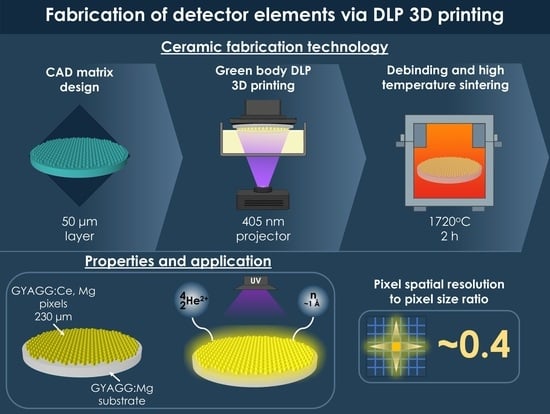
Open AccessArticle Novel Integrated Technology of Pixelized Inorganic Scintillator Wafers for X-Rays and Neutron Detection 1 National Research Centre «Kurchatov Institute», 123098 Moscow, Russia 2 Institute for Nuclear Problems, Belarus State University, 220030 Minsk, Belarus 3 Department of Chemistry and Technology of Crystals, Mendeleev University of Chemical Technology of Russia, 125047 Moscow, Russia 4 Fabrika RTT LLC, 107078 Moscow, Russia * Authors to whom correspondence should be addressed. Molecules 2026, 31(12), 2013; https://doi.org/10.3390/molecules31122013 (registering DOI) Submission received: 28 April 2026 / Revised: 29 May 2026 / Accepted: 2 June 2026 / Published: 9 June 2026 Abstract Pixelated detectors based on inorganic scintillation materials are widely used in radiation detection systems for medical imaging and many other fields of science and technology. A substantial application is X-ray scanning using flat-panel detectors (FPDs) for both fluorography and mammography. In this article, the detection properties of the monolithic planar ceramic scintillation elements are reported for the first time. A high-light yield (Gd,Y) 3Al 2Ga 3O 12:Ce,Mg garnet-type scintillation material was used to form square-shaped pixels, while a material of similar composition was used as a substrate. Green bodies were successfully fabricated by a digital light processing (DLP) 3D printing method. Subsequent debinding and pressureless high-temperature sintering resulted in composite elements consisting of two layers with different chemical compositions. The lower bulk layer consisted of transparent, non-luminescent garnet, whereas the upper pixelated layer, with pixel dimensions of 230 × 230 µm, was made of scintillation material. The spatial resolution of the matrices under UV light and alpha-particle excitation was evaluated. It was confirmed that the spatial resolution of the matrices produced by the developed technology is approximately 0.4 times the pixel size. The proven ability of the integrated technology of inorganic scintillation matrix production opens the way for future improvement in spatial resolution through optimizing the printed pixel dimensions. Keywords: additive manufacturing; ceramics; garnet; scintillator; stereolithography Graphical Abstract 1. Introduction A breakthrough innovation in scintillation elements for FPDs was the use of thin detector plates made of columnar CsI(Tl) [ 4, 5, 6], as well as plates based on the Gd 2O 2S:Tb (GOS) composite [ 5, 6, 7]. The drawback of the columnar detector element is the low effective density of the material, which is equal to 0.7 times the density of a single crystal [ 8]. Moreover, the structure of the columnar element has a highly developed surface which, given the relatively high hygroscopicity of the material, imposes strict requirements for the packaging of such elements in matrices. GOS scintillation ceramics have a high scintillation yield and are used in powder form to create scintillation composites [ 9]. However, such ceramics are opaque and so are the powder particles made from them; therefore, the scintillation yield from a composite of a binder and GOS powder drops quickly with increasing plate thickness. Currently, promising composite detectors for X-ray imaging are based on glass and ZnS:Ag scintillator powder [ 10] or GAGG:Ce scintillator powder with a polysiloxane polymer binder [ 11]. Another area of application of FPDs, in the presence of Li, B, or Gd ions in the scintillator material, is the detection of thermal neutrons [ 12, 13, 14, 15]. Moreover, research and development of multimodal detector elements for FPD have also progressed. A novel composite scintillator made of Li 6Gd(BO 3) 3:Ce powder and polymethyl methacrylate for X-ray and thermal neutron detection was recently announced [ 16]. It exhibits blue light at 416 nm under UV excitation, shows performance superior to that of commercial CsI:Na under X-ray excitation, and provides a light yield of 21,000 photons/thermal neutron under thermal neutron irradiation. A common disadvantage of composite materials is the translucency of the detector layer. This precludes the production of relatively thick detector layers. This problem can be resolved by using the scintillation thin films deposited on the substrates of the same material [ 17, 18]. However, thin films have a low stopping power for ionizing radiation, which results in longer acquisition times during detection. A series of compounds with a garnet structure having compositions of (Gd,Y,Ce,Tb) 3(Al,Ga) 5O 12 (GYAGG:Ce,Tb) can be obtained in transparent form as both single crystals and ceramics [ 19, 20]. They are characterized by high scintillation yield when detecting X-ray and gamma-radiation [ 21, 22]. GYAGG:Ce contains 155Gd and 157Gd isotopes, which have a thermal neutron capture cross-section size of 61,000 b and 255,000 b, respectively [ 23]. The material composition includes Gd 3+ ions, of which its natural mixture has the highest neutron absorption cross-section [ 24]. Powders from grounded ceramics allow for the creation of neutron-sensitive screens with high performance characteristics [ 25]. A transition from traditional methods of composite and ceramic fabrication to digital production allows not only for the optimization of geometry but also for a programmable design of the internal architecture of composite and ceramic bodies, which is crucial for the development of next-generation scintillation detectors and laser media. In this study, we focused on developing the fundamentals for the fabrication of monolithic detector elements consisting of scintillation pixels and a substrate obtained using a ceramic method. For the first time, monolithic ceramic pixelated detector elements were produced on a substrate made of the same material, with the breakthrough being the use of 3D stereolithographic printing to produce green bodies. High spatial resolution was demonstrated in both ultraviolet and alpha-particle measurements. 2. Results and Discussion The representative views of green bodies and ceramic matrices obtained by optic microscopy are presented in Figure 1a and Figure 1b, respectively. The images show an almost defect-free pixelated structure both at the green body stage after DLP 3D printing and after debinding and high-temperature sintering, while the geometry of the array is well preserved. The average pixel tip size in the green body is 320 ± 10 μm with gaps of 320 ± 10 μm, which corresponds well with the initial model; the pixel bases are slightly wider due to the DLP 3D printing peculiarities. Due to shrinkage during high-temperature sintering in ceramics, the pixel size decreases to 230 ± 10 μm with gaps of 250 ± 15 μm. It is also seen that the ceramic base remains transparent and light yellow, which is probably due to the diffusion of cerium from pixels into the substrate volume. The measured relative density of ceramics is about 100%. The ceramic microstructure was studied. GYAGG:Ce demonstrates an average grain size of 5.5 ± 1.0 μm, while GYAGG exhibits an increased grain size of 15 ± 1 μm due to 100 ppm of Mg acting as a sintering aid. The porosity of ceramics is less than 0.4%. Figure 2 shows the results of the simulation by the Geant4 [ 33] package. The modeling aimed to evaluate cross-talk between the substrate and pixels. In the model, the beam of thermal neutrons (E n = 0.0253 eV) with a diameter of 2 μm bombarded the center of the pixel on the substrate plate from the top. The pixel cross-section varied from 50 × 50 μm 2 to 500 × 500 μm 2, and the spectra of the energy deposition in the sample were determined by registering secondary particles leaving the pixel. The number of neutrons shooting out of the target was 10 6. Based on the obtained spectra, the number of events of secondary particles leaving the plate from the pixel was calculated provided that they released energy in the GYAGG disk above 20 keV. The obtained results, normalized by one primary neutron, are shown in Figure 3. The mean free path of conversion electrons in this material is about 30 μm, which is fairly close to the photo-electrons created by the same energy. This means that even if the interaction occurs near the edge of the pixel, there is no cross-talk effect due to the photon migration between pixels. Moreover, the cross-talk can be easily suppressed by using, for example, a BaSO 4 reflector in the space in between pixels. Therefore, a minimal cross-section of the acceptable pixel for both X-ray and thermal neutron detection is about 30 μm by 30 μm. This is sufficient for many applications in X-ray and neutron radiography. Moreover, pixels can be thicker to provide high stopping power for radiation, but spatial resolution is determined by the pixel cross-section. Figure 4a shows the image of the matrix under UV LED excitation. Figure 4b depicts the sum of 30 images of the matrix under alpha-particle excitation with an exposure of 600 s each obtained using IRIS software Version 5.59 [ 34]. The intensity variation in the latter image is due to a decrease in the alpha-particle flux according to the 1/r 2 law, where r is the distance from the source to the pixel. For the excitation by ionizing radiation, alpha-particles with an energy of 5.4 MeV were selected. They provide intense ionization within a depth of several micrometers in both the pixels and the substrate. Also, the excitation by alpha-particles mimics excitation by low-energy X-rays; the length of their ionization tracks are comparable to the tracks of photo-electrons created by the X-rays. As for neutrons, the scintillator response due to the coinciding-in-time transitions to the ground state from the lowest excited energy levels of the 156,158Gd nuclei (X-rays~44 keV) and internal conversion electrons (~33 keV) are of particular interest [ 35]. In addition, the matrix was irradiated with monochromatic neutrons with an energy of 0.0818 eV with a flux of 4 × 10 6 n/cm 2. Exposure time was chosen to be 300 s in the latter case. By the means of ImageJ software Version 1.51j8 [ 36], based on the pictures obtained under UV ( Figure 4a) and alpha-particles ( Figure 4b), average photometric pixel profiles have been obtained ( Figure 5). At the same time, the average pixel size was calculated, and it is equal to 229 ± 6 μm. Next, the increasing part of the averaged profile of each pixel was approximated by the Gaussian function and the standard deviation was doubled, which determined the spatial resolution of the pixel structure; the calculation method is considered in [ 37] and the determination of the spatial resolution is discussed in [ 38]. Furthermore, the ratio of the spatial resolution of a pixel to its size (230 μm) was calculated, and the values obtained were averaged over the number of pixels involved in the calculations. The final value of the ratio of the pixel’s spatial resolution to its size turned out to be about 0.41 when the matrix was excited by UV radiation and about 0.44 when the matrix was excited by alpha-particles from the 241Am source. A close intensity modulation depth in both cases suggests that the substrate plate does not scintillate. Therefore, such an element can provide reasonable-quality images even without filling the space in between pixels. During neutron measurements, the matrix structure was easily recognized. The matrix was fixed using an adhesive in several points to an Al plate. These parts appear as lighter areas in the bottom right part of Figure 4c. 3. Materials and Methods 3.1. Initial Materials and Powder Synthesis Metallic gallium (Ga), boehmite (AlO(OH)), and high-purity oxides of yttrium (Y 2O 3) and gadolinium (Gd 2O 3), as well as cerium nitrate (Ce(NO 3) 3), were used as starting materials to synthesize the initial fine multicomponent oxide powders with a cubic garnet-type crystal structure ( Ia-3d, #230). GYAGG:Ce and GYAGG powders were synthesized by co-precipitation from nitrate solutions of the corresponding elements using ammonium bicarbonate (NH 4HCO 3) as the precipitating agent. The dried precipitates were calcined at the following temperatures: 1300 °C for GYAGG:Ce and 1250 °C for GYAGG for 2 h. The powders were then milled down in a planetary ball mill. Magnesium oxide (MgO) was added to the GYAGG powder as a highly diluted Mg(NO 3) 2 solution to obtain a Mg concentration of 100–200 ppm in the powder, and the mixture was mechanically mixed using grinding media. Prior to suspension preparation, the powders were dried at 70 °C in a laboratory oven to remove residual moisture. The specific surface area and porosity of the multicomponent powders of complex oxides with a garnet structure were measured using a TriStar 3000 analyzer (Micromeritics, Norcross, GA, USA) by BET and BJH methods, respectively. The measured specific surface areas of GYAGG:Ce and GYAGG powders were 4.5 and 5.8 m 2/g, respectively. The porosity values of such powders were 0.007 and 0.008 cm 3/g. The morphology of the primary powder particles ( Figure 6) was analyzed using a JSM 7100f scanning electron microscope (Jeol, Akishima, Tokyo). GYAGG consists of agglomerated, predominantly rounded nanoparticles with a size of 30–70 nm ( Figure 6a). GYAGG:Ce, calcined at the higher temperature, exhibits larger particles of 50–120 nm with a more distinct faceted morphology ( Figure 6b). The particle size distribution ( Figure 7a) was measured by a laser diffraction on a MasterSizer 2000 (Malvern Instruments, Malvern, UK). The phase purity of the initial garnet powders was confirmed by X-ray diffraction on a D2 Phaser (Bruker, Billerica, MA, USA) using Cu K α1,2 radiation ( Figure 7b). Thus, both initial garnet-type powders have a comparable specific surface area, micromorphology, and average aggregate size (d 50), which makes it possible to achieve similar sintering capacities (ceramic shrinkage during high-temperature sintering). 3.2. Slurry Preparation and 3D Printing The commercially available 1,6-hexanediol diacrylate (HDDA, technical grade, Sigma-Aldrich, Saint Louis, MO, USA), known for its controlled polymerization kinetics and low viscosity (6–8 mPa·s at 25 °C), was used as the monomer [ 39]. The photoinitiator diphenyl (2,4,6-trimethylbenzoyl) phosphine oxide was used to initiate the radical polymerization reaction. The ceramic suspension was stabilized with a previously experimentally selected phosphorus-free DISPERBYK dispersant [ 40]. The preparation of photocurable suspensions began with mixing the acrylate monomer, photoinitiator, and a dispersant. Then the garnet oxide powders were added step-by-step until the solid content reached 40 vol.% (about 80 wt.%). A homogeneous suspension was prepared using a vacuum mixer and ZrO 2 grinding beads in transparent polypropylene vials. The rheology of the photocurable suspensions was studied using a Physica MCR 52 rheometer (Anton Paar, Graz, Austria) in a parallel plate geometry with a measuring disk diameter of 25 mm and a gap of 0.2 mm. The viscosity was measured as a function of the shear rate in the range of 10–200 s −1 at a fixed temperature of 20.0 °C. The dependence of the shear stress on the shear rate was approximated by the Herschel–Bulkley equation [ 41]: τ = τ 0 + Kγ n, (1) where τ 0 is the yield strength, K is the consistency index, and n is the flow behavior index. The depth of photopolymerization was assessed using the DLP 3D printer Ember (Autodesk, San Francisco, CA, USA, λ = 405 nm, E = 11 mJ/cm 2) curing single-layer disks at different exposure doses, the thickness of which was determined on a micrometer. Based on these data, plots showing the dependence of the cured layer thickness on the energy dose were constructed to determine the optimal printing parameters. The measured values were approximated using the Jacobs model derived from the Lambert–Bouguer–Baer law [ 42]: C d = D p ln(E max/E c) (2) where C d is the cure depth; D p is the penetration depth; E max is the maximum exposure energy; and E c is the critical (lowest) exposure energy required to activate monomer polymerization. The measured viscosity and cure depth of the photosensitive suspensions are given in the Supplementary Materials. All measurements were carried out at room temperature. A commercially available, low-cost, and simple desktop DLP 3D printer, Photon Ultra (Anycubic, Shenzhen, China, λ = 405 nm, E = 2.35 mJ/cm 2), was used to form dual-layer structured green bodies. Such a printer implements the method using a bottom-up vat polymerization configuration. The light intensity of the UV projector was measured with a UV light meter Model 222 (G&R Labs, Santa Clara, CA, USA). The nominal resolution of the printer along the X and Y axes was 80 × 80 μm. The 3D model was built using the KOMPAS-3D computer-aided design software Version 23 (ASCON, Saint Petersburg, Russia). See the stl-file of the pixelate matrix in the Supplementary Materials. It consisted of a bulk colorless substrate with a diameter of 15 mm and a thickness of 1 mm, on which rectangular pixels were located with a certain gap between them. The CAD model had 320 × 320 × 350 μm pixels with a gap of 320 μm between them. The file was sliced using Photon Workshop software Version 4.1.1 (Anycubic, China). The bottom layer of the pixels and the substrate consisted of non-activated, non-luminescent (“blanc”) compositions with GYAGG:Mg powder, while the yellow pixels consisted of the ceria-activated garnet powder GYAGG:Ce (the scintillation material). To reduce the diffusion of cerium ions from the pixels into the bulk substrate during ceramic sintering at high temperature, the pixels had a complex structure ( Figure 8). The bottom 50 μm layer served as part of a reflective substrate, while the remaining volume consisted of cubic scintillation pixels. Three-dimensional printing was performed sequentially by replacing the resin vats with suspensions of different compositions. After printing, the green bodies were washed in HDDA in a laboratory ultrasonic bath, dried, and post-cured under UV light on both sides. The removal of the organic binder from the green bodies was carried out in an Ar/H 2 atmosphere (95/5%) by heating from room temperature up to 500 °C at a rate of 0.6 °C/min. Then, the resulting brown bodies were fired into the air in a muffle furnace. Finally, bilayer bodies (GYAGG:Ce/GYAGG) were sintered into a dense ceramic matrix in an oxygen flow in a tubular furnace for 2 h at 1720 °C. White YAG ceramics were used as a sintering substrate. 3.3. Monolithic Scintillation Element Characterization To measure the spatial resolution of the pixelated matrix, the self-made purpose-designed setups were used ( Figure 9a,b) at room temperature. In the first case, the setup consisted of a CCD matrix, a lens with a green filter, and a UV LED (265–285 nm) [ 43] placed in a light-isolated box. In the second case, alpha-particles from a 241Am source with activity 10 4 Bq in 4π, which was positioned at a distance of 1 cm and at approximately a 45-degree angle relative to the normal to the surface of the matrix, were used. The alpha-particle source and the matrix were placed in a vacuum chamber ( Figure 9b) to avoid energy losses of the alpha-particles in the air. GYAGG:Ce,Mg scintillation ceramics exhibit a light yield of approximately 40,000 ph/MeV [ 30]. Figure 10 demonstrates a comparison of the pulse height spectra measured for a reference sample of Y 3Al 5O 12:Ce (YAG:Ce, 24,000 ph/MeV) and a matrix under alpha-particle excitation. Both measurements were performed without immersion liquid in between the sample and the photoreceiver window of the XP2020 photomultiplier (Philips, Cambridge, MA, USA). During the measurements, pixels were at the top, so additional light losses were created by the substrate between the pixels and PMT window. 4. Conclusions A novel, cost-effective, and relatively straightforward approach to producing a two-layer inorganic scintillator ceramic material, consisting of a transparent GYAGG:Mg substrate with GYAGG:Ce,Mg pixels, is presented. This matrix can be utilized in planar detectors for various ionizing radiations. This is the first experimental validation of the idea that a structured pixelated detector with high spatial resolution can be created using inexpensive and readily accessible equipment. A pixel spatial resolution-to-pixel size ratio of approximately 0.4 suggests that lasers or more sophisticated DLP 3D printers, capable of printing with a high lateral resolution of 30–50 microns, can demonstrate spatial resolutions of around 10–20 microns. Supplementary Materials The following supporting information can be downloaded at: https://www.mdpi.com/article/10.3390/molecules31122013/s1, Figure S1: Viscosity versus shear rate for the photocurable HDDA-based suspensions with GYAGG:Ce and GYAGG fine powders (solid loading 35 vol.%) at 20.0 °C; Figure S2: Cure depth versus energy dose for the photocurable HDDA-based suspensions with GYAGG:Ce and GYAGG fine powders (solid loading 35 vol.%) at room conditions. Stl-file with computer model of pixeled matrix. Author Contributions Conceptualization, M.V.K.; methodology, M.V.K. and V.A.M.; software, A.G.B. and E.A.B.; validation, P.S.S. and P.V.K.; formal analysis, V.A.M.; investigation, V.G.S., L.V.E., A.M.S., A.V.P., and D.V.S.; resources, M.V.K. and I.Y.K.; data curation, P.V.K.; writing—original draft preparation, L.V.E. and E.A.B.; writing—review and editing, P.S.S. and M.V.K.; visualization, V.A.M., L.V.E., and E.A.B.; supervision, I.Y.K.; project administration, P.S.S.; funding acquisition, P.S.S. All authors have read and agreed to the published version of the manuscript. Funding This research was funded by the Russian Science Foundation, grant number 22-13-00172-P, https://rscf.ru/project/22-13-00172/ (accessed on 1 June 2026). The funder was not involved in the study design; collection, analysis, or interpretation of the data; the writing of this article; or the decision to submit it for publication. Institutional Review Board Statement Not applicable. Informed Consent Statement Not applicable. Data Availability Statement Any primary data and other results supporting the conclusions of this study are available from the corresponding author upon reasonable request. Acknowledgments Research was performed using equipment from the “Research Chemical and Analytical Center NRC “Kurchatov Institute” Shared Research Facilities. The authors are grateful to M. Murashev for the measurements with thermal neutrons at the neutron facilities of NRC “Kurchatov Institute”. Conflicts of Interest Andrey V. Popov and Dmitriy V. Sosnov are employees of Fabrika RTT LLC. The other authors declare no conflicts of interest. Fabrika RTT LLC had no role in the design of the study; in the collection, analyses, or interpretation of data; in the writing of the manuscript; or in the decision to publish the results. Abbreviations The following abbreviations are used in this manuscript: BET Brunauer–Emmett–Teller BJH Barrett–Joyner–Halenda CCD Charge-coupled device DLP Digital light processing FPDs Flat-panel detectors GAGG Gadolinium aluminum gallium garnet GYAGG:Ce Cerium-doped gadolinium–yttrium aluminum gallium garnet HDDA 1,6-hexanediol diacrylate LED Light-emitting diode LuAG Lutecium aluminum garnet UV Ultraviolet YAG Yttrium aluminum garnet References Seibert, J.A. Flat-panel detectors: How much better are they? Pediatr. Radiol. 2006, 36, 173–181. [ Google Scholar] [ CrossRef] Nikl, M. Scintillation detectors for x-rays. Meas. Sci. Technol. 2006, 17, R37–R54. [ Google Scholar] [ CrossRef] Rowlands, J.A.; Yorkston, J. Flat panel detectors for digital radiography. In Handbook of Medical Imaging; SPIE Press: Bellingham, WA, USA, 2000; Volume 1, pp. 223–328. [ Google Scholar] [ CrossRef] Zhao, W.; Ristic, G.; Rowlands, J.A. X-ray imaging performance of structured cesium iodide scintillators. Med. Phys. 2004, 31, 2594–2605. [ Google Scholar] [ CrossRef] [ PubMed] Bugby, S.L.; Jambi, L.K.; Lees, J.E. A comparison of CsI:Tl and GOS in a scintillator-CCD detector for nuclear medicine imaging. J. Inst. 2016, 11, P09009. [ Google Scholar] [ CrossRef] Howansky, A.; Mishchenko, A.; Lubinsky, A.R.; Zhao, W. Comparison of CsI:Tl and Gd 2O 2S:Tb indirect flat panel detector X-ray imaging performance in front- and back-irradiation geometries. Med. Phys. 2019, 46, 4857–4868. [ Google Scholar] [ CrossRef] Greskovich, C.; Duclos, S. Ceramic scintillators. Annu. Rev. Mater. Sci. 1997, 27, 69–88. [ Google Scholar] [ CrossRef] Flat Panel Detector Venu1717X User Manual. 2020. Available online: https://www.2020imaging.net/support/PDF/Self_Help_Guides/Full_Manuals/072-201-02%C2%A0User%C2%A0Manual%C2%A0of%C2%A0Venu1717X.pdf (accessed on 3 April 2026). Sato, K.; Nariyuki, F.; Nomura, H.; Takasu, A.; Fukui, S.; Nakatsu, M.; Okada, Y.; Nabeta, T.; Hosoi, Y. Effect of X-ray incident direction and scintillator layer design on image quality of indirect-conversion flat-panel detector with GOS phosphor. In SPIE Medical Imaging, Lake Buena Vista, FL, USA, 17 March 2011; SPIE Press: Bellingham, WA, USA, 2011; p. 79614I. [ Google Scholar] [ CrossRef] Tu, D.; Wang, D.; Liu, X.; Lv, S.; Tang, B.; Sun, Z.; Zhou, S. Glass-ZnS:Ag scintillating composite for radiation detection. J. Am. Ceram. Soc. 2024, 107, 5265–5273. [ Google Scholar] [ CrossRef] Gerasymov, I.; Nepokupnaya, T.; Boyarintsev, A.; Sidletskiy, O.; Kurtsev, D.; Voloshyna, O.; Trubaieva, O.; Boyarintseva, Y.; Sibilieva, T.; Shaposhnyk, A.; et al. GAGG: Ce composite scintillator for X-ray imaging. Opt. Mater. 2020, 109, 110305. [ Google Scholar] [ CrossRef] Cha, B.K.; Kim, J.Y.; Kim, T.J.; Kim, Y.; Sim, C.; Lee, S.W.; Cho, G. Investigation of the performance of scintillator-based CMOS flat panel detectors for X-ray and thermal neutron imaging. IEEE Trans. Nucl. Sci. 2010, 57, 1409–1413. [ Google Scholar] [ CrossRef] Liang, J.; Li, C.; Wu, Q.; Yao, L.; Hai, Y.; Zhou, X.; Wang, C.L. Fast Ce-doped LiYSiO 4/Polymer composite scintillators for multimodal radiation detection. J. Phys. Chem. C 2025, 129, 3798–3808. [ Google Scholar] [ CrossRef] An, B.; Deng, Y.; Jin, Z.; Sun, S. Scintillators for neutron detection and imaging: Advances and prospects. Adv. Funct. Mater. 2025, 35, 2422522. [ Google Scholar] [ CrossRef] Gui, W.; Yao, L.; Zhou, X.; Wu, Q.; Li, C.; Zhang, S.; Zhan, Y.; Wang, C.L. Cu-doped Cs 2AgI 3 composite-loaded plastic scintillators for X-ray and thermal neutron detection. IEEE Trans. Nucl. Sci. 2025, 72, 38–45. [ Google Scholar] [ CrossRef] Zhou, X.; Wang, C.L.; Wang, Y. Transparent microcomposite films based on a Ce-doped Li 6Gd(BO 3) 3 scintillator for radiation detection. ACS Omega 2022, 7, 31567–31576. [ Google Scholar] [ CrossRef] Kameshima, T.; Sato, T.; Kudo, T.; Ono, S.; Ozaki, K.; Katayama, T.; Hatsui, T.; Yabashi, M. A scintillator fabricated by solid-state diffusion bonding for high spatial resolution x-ray imaging. AIP Conf. Proc. 2016, 1741, 040033. [ Google Scholar] [ CrossRef] Kameshima, T.; Takeuchi, A.; Uesugi, K.; Kudo, T.; Kohmura, Y.; Tamasaku, K.; Muramatsu, K.; Yanagitani, T.; Yabashi, M.; Hatsui, T. Development of an X-ray imaging detector to resolve 200 nm line-and-space patterns by using transparent ceramics layers bonded by solid-state diffusion. Opt. Lett. 2019, 44, 1403–1406. [ Google Scholar] [ CrossRef] Korzhik, M.; Alenkov, V.; Buzanov, O.; Dosovitskiy, G.; Fedorov, A.; Kozlov, D.; Mechinsky, V.; Nargelas, S.; Tamulaitis, G.; Vaitkevičius, A. Engineering of a new single-crystal multi-ionic fast and high-light-yield scintillation material (Gd 0.5–Y 0.5) 3Al 2Ga 3O 12:Ce,Mg. CrystEngComm 2020, 22, 2502–2506. [ Google Scholar] [ CrossRef] Korzhik, M.; Bogomolov, V.; Bondarau, A.; Borisevich, E.; Buzanov, O.; Iyudin, A.; Karpyuk, P.; Komendo, I.; Lagutskiy, I.; Okhotnikova, K.; et al. Crystalline scintillation materials of the aluminum–gallium family to equip light satellites with neutron detectors. J. Appl. Phys. 2025, 138, 193101. [ Google Scholar] [ CrossRef] Korzhik, M.; Retivov, V.; Dosovitskiy, G.; Dubov, V.; Kamenskikh, I.; Karpuk, P.; Komendo, I.; Kuznetsova, D.; Smyslova, V.; Mechinsky, V.; et al. First observation of the scintillation cascade in Tb 3+-doped quaternary garnet ceramics. Phys. Status Solidi RRL 2023, 17, 2200368. [ Google Scholar] [ CrossRef] Korzhik, M.; Tamulaitis, G.; Vasil’ev, A.N. Physics of Fast Processes in Scintillators; Springer International Publishing: Cham, Switzerland, 2020. [ Google Scholar] [ CrossRef] Reeder, P.L. Neutron detection using GSO scintillator. Nucl. Instrum. Methods Phys. Res. A 1994, 340, 371–378. [ Google Scholar] [ CrossRef] Korjik, M.; Brinkmann, K.T.; Dosovitskiy, G.; Dormenev, V.; Fedorov, A.; Kozlov, D.; Mechinsky, V.; Zaunick, H.-G. Compact and effective detector of the fast neutrons on a base of Ce-doped Gd 3Al 2Ga 3O 12 scintillation crystal. IEEE Trans. Nucl. Sci. 2019, 66, 536–540. [ Google Scholar] [ CrossRef] Fedorov, A.; Komendo, I.; Amelina, A.; Gordienko, E.; Gurinovich, V.; Guzov, V.; Dosovitskiy, G.; Kozhemyakin, V.; Kozlov, D.; Lopatik, A.; et al. GYAGG/ 6LiF composite scintillation screen for neutron detection. Nucl. Eng. Technol. 2022, 54, 1024–1029. [ Google Scholar] [ CrossRef] Seelye, Z.; Yee, T.; Cherepy, N.; Drobshoff, A.; Herrera, O.; Ryerson, R.; Payne, S. 3D printed transparent ceramic YAG laser rods: Matching the core-clad refractive index. Opt. Mater. 2020, 107, 110121. [ Google Scholar] [ CrossRef] Zhang, G.; Carloni, D.; Wu, Y. 3D printing of transparent YAG ceramics using copolymer-assisted slurry. Ceram. Int. 2020, 46, 17130–17134. [ Google Scholar] [ CrossRef] Li, B.; Wang, S.; Chen, J.; Li, Z.; Shan, W.; Wang, X.; Jiang, B.; He, J.; Zhang, L. 3D Printing of LuAG: Ce transparent ceramics for laser-driven lighting. Ceram. Int. 2023, 49, 38708–38716. [ Google Scholar] [ CrossRef] Tang, H.; Cheng, S.; Hu, S.; Song, Q.; Zhou, G. Preparation of high optical quality LuAG: Ce transparent ceramics via digital light processing (DLP) 3D printing. Ceram. Int. 2025, 51, 64573–64579. [ Google Scholar] [ CrossRef] Ermakova, L.V.; Smyslova, V.G.; Dubov, V.V.; Karpyuk, P.V.; Sokolov, P.S.; Komendo, I.Y.; Bondarau, A.G.; Mechinsky, V.A.; Korzhik, M.V. Scintillation and luminescent properties of the (Gd,Y) 3Al 2Ga 3O 12: Ce ceramics obtained by compaction of green bodies using digital light processing 3D printing. Photonics 2024, 11, 695. [ Google Scholar] [ CrossRef] Oad, N.; Pandya, D.; Rawat, S.; Chandra, P.; Tripathi, B.; Gurrala, P.; Sarkar, P.S.; Tyagi, M. X-ray imaging using 3D-printed thin films of solvothermal GGAG: Ce 3+ powder. Opt. Mater. 2026, 169, 117611. [ Google Scholar] [ CrossRef] Kapyla, E.; Turunen, S.; Kellomaki, M. Two-photon polymerization of a polymer-ceramic hybrid material with a low-cost Nd: YAG laser: Preliminary resolution study and 3D fabrication. Micro Nanosyst. 2010, 2, 87–99. [ Google Scholar] [ CrossRef] Allison, J.; Amako, K.; Apostolakis, J.; Arce, P.; Asai, M.; Aso, T.; Bagli, E.; Bagulya, A.; Banerjee, S.; Barrand, G.; et al. Recent developments in Geant4. Nucl. Instrum. Methods Phys. Res. A 2016, 835, 186–225. [ Google Scholar] [ CrossRef] Buil, C. IRIS: Astronomical Image-Processing Software. In Digital Astrophotography: The State of the Art; Springer: London, UK, 2005; pp. 79–88. [ Google Scholar] [ CrossRef] Haruna, J.; Kaneko, J.H.; Higuchi, M.; Kawamura, S.; Saeki, S.; Yagi, Y.; Ishibashi, H.; Fujita, F.; Homma, A.; Furusaka, M.; et al. Response function measurement of Gd 2Si 2O 7 scintillator for neutrons. In Proceedings of the 2007 IEEE Nuclear Science Symposium Conference Record, Honolulu, HI, USA, 26 October–03 November 2007; IEEE: New York, NY, USA, 2007; Volume 2, pp. 1421–1425. [ Google Scholar] [ CrossRef] Schneider, C.A.; Rasband, W.S.; Eliceiri, K.W. NIH Image to ImageJ: 25 years of image analysis. Nat. Methods 2012, 9, 671–675. [ Google Scholar] [ CrossRef] Yalcin, I.; Kocaman, S.; Saunier, S.; Albinet, C. Radiometric quality assessment for maxar hd imagery. Arch. Photogramm. Remote Sens. Spat. Inf. Sci. 2021, 43, 797–804. [ Google Scholar] [ CrossRef] Nozaki, H.; Kondo, H.; Shinohara, T.; Setoyama, D.; Matsumoto, Y.; Sasaki, T.; Isegawa, K.; Hayashida, H. In situ neutron imaging of lithium-ion batteries during heating to thermal runaway. Sci. Rep. 2023, 13, 22082. [ Google Scholar] [ CrossRef] Halloran, J.W. Ceramic stereolithography: Additive manufacturing for ceramics by photopolymerization. Annu. Rev. Mater. Res. 2016, 46, 19–40. [ Google Scholar] [ CrossRef] Karpyuk, P.V.; Ermakova, L.V.; Dubov, V.V.; Lelekova, D.E.; Saifutyarov, R.R.; Zhdanov, P.A.; Malozovskaya, M.S.; Komendo, I.Y.; Sokolov, P.S.; Bondarau, A.G.; et al. Effect of phosphorus-containing dispersant on the microstructure and optical properties of scintillation ceramic (Gd,Y) 3(Al,Ga) 5O 12: Ce with garnet structure. J. Surf. Investig. X-Ray Synchrotron Neutron Tech. 2024, 18, 983–991. [ Google Scholar] [ CrossRef] Herschel, W.H.; Bulkley, R. Konsistenzmessungen von gummi-benzollösungen. Kolloid-Z. 1926, 39, 291–300. [ Google Scholar] [ CrossRef] Jacobs, P.F. Fundamentals of Stereolithography. 1992 International Solid Freeform Fabrication Symposium. Available online: http://hdl.handle.net/2152/64400 (accessed on 3 April 2026). Taiwan Oasis Technology Co., Ltd. TO-3535BC-UVC265-30-6V-E Surface Mount Device LED: Datasheet; Doc. No. GS2004020; Released 24 April 2020. Available online: https://static.chipdip.ru/lib/654/DOC005654109.pdf (accessed on 3 April 2026). Disclaimer/Publisher’s Note: The statements, opinions and data contained in all publications are solely those of the individual author(s) and contributor(s) and not of MDPI and/or the editor(s). MDPI and/or the editor(s) disclaim responsibility for any injury to people or property resulting from any ideas, methods, instructions or products referred to in the content. © 2026 by the authors. Licensee MDPI, Basel, Switzerland. This article is an open access article distributed under the terms and conditions of the Creative Commons Attribution (CC BY) license. Share and Cite MDPI and ACS Style Sokolov, P.S.; Ermakova, L.V.; Bondarau, A.G.; Karpyuk, P.V.; Smyslova, V.G.; Sergeev, A.M.; Komendo, I.Y.; Mechinsky, V.A.; Borisevich, E.A.; Popov, A.V.; et al. Novel Integrated Technology of Pixelized Inorganic Scintillator Wafers for X-Rays and Neutron Detection. Molecules 2026, 31, 2013. https://doi.org/10.3390/molecules31122013 AMA Style Sokolov PS, Ermakova LV, Bondarau AG, Karpyuk PV, Smyslova VG, Sergeev AM, Komendo IY, Mechinsky VA, Borisevich EA, Popov AV, et al. Novel Integrated Technology of Pixelized Inorganic Scintillator Wafers for X-Rays and Neutron Detection. Molecules. 2026; 31(12):2013. https://doi.org/10.3390/molecules31122013 Chicago/Turabian Style Sokolov, Petr S., Lydia V. Ermakova, Aliaksei G. Bondarau, Petr V. Karpyuk, Valentina G. Smyslova, Alexey M. Sergeev, Ilia Y. Komendo, Vitaly A. Mechinsky, Elizaveta A. Borisevich, Andrey V. Popov, and et al. 2026. "Novel Integrated Technology of Pixelized Inorganic Scintillator Wafers for X-Rays and Neutron Detection" Molecules 31, no. 12: 2013. https://doi.org/10.3390/molecules31122013 APA Style Sokolov, P. S., Ermakova, L. V., Bondarau, A. G., Karpyuk, P. V., Smyslova, V. G., Sergeev, A. M., Komendo, I. Y., Mechinsky, V. A., Borisevich, E. A., Popov, A. V., Sosnov, D. V., & Korzhik, M. V. (2026). Novel Integrated Technology of Pixelized Inorganic Scintillator Wafers for X-Rays and Neutron Detection. Molecules, 31(12), 2013. https://doi.org/10.3390/molecules31122013 Article Metrics Article metric data becomes available approximately 24 hours after publication online.
Novel Integrated Technology of Pixelized Inorganic Scintillator Wafers for X-Rays and Neutron Detection